
First search warrant
Suspecting Gacy might be holding Piest at his home, Des Plaines police obtained a search warrant on December 13. This search revealed several suspicious items, including several police badges, a starting pistol, a syringe and hypodermic needle, handcuffs, books about homosexuality and pederasty, pornographic and stag films, capsules of amyl nitrite, a dildo, a two-by-four with two holes drilled into each end, bottles of Valium and atropine, several driver's licenses, a blue hooded parka, and underwear too small to fit Gacy. They also found a class ring engraved with the initials J.A.S. and a Nisson Pharmacy photo receipt in a trash can, alongside a 36-inch (91 cm) section of nylon rope.
Surveillance
The Des Plaines police confiscated Gacy's Oldsmobile and other PDM work vehicles. Surveillance teams (consisting of officers Mike Albrecht and David Hachmeister, and Ronald Robinson and Robert Schultz) monitored Gacy as the investigation continued. The following day, investigators received a phone call from Michael Rossi, who informed the investigators of Gregory Godzik's disappearance and the fact that another PDM employee, Charles Hattula, had been found drowned in an Illinois river earlier that year.
On December 15, Des Plaines investigators obtained further details of Gacy's battery charge, learning Jeffrey Rignall had reported that Gacy had lured him into his car, then chloroformed, raped and tortured him before dumping him in Lincoln Park. In an interview with Gacy's former wife the same day, they learned of the disappearance of John Butkovich. The same day, the class ring was traced to a John Alan Szyc. An interview with Szyc's mother revealed that several items from her son's apartment were also missing, including a Motorola television.
By December 16, Gacy was becoming affable with the surveillance detectives, regularly inviting them to join him for meals in restaurants and occasionally for drinks in bars or at his home. He repeatedly denied involvement with Piest's disappearance and accused the officers of harassing him because of his political connections or his recreational drug use. Knowing these officers were unlikely to arrest him on anything trivial, he openly taunted them by flouting traffic laws and succeeded in losing his pursuers more than once. That afternoon, Cram consented to a police interview in which he revealed that, because of his poor timekeeping, Gacy had once given him a watch which he claimed to have obtained "from a dead person".
Investigators conducted a formal interview of Rossi on December 17. He informed them Gacy had sold him Szyc's vehicle, explaining that he had bought the car from Szyc because he needed money to move to California. A further examination of Gacy's Oldsmobile revealed a small cluster of fibers in the trunk, suspected to be human hair. That evening, three trained search dogs were used to determine whether Piest had been present in any of Gacy's vehicles. One laid on the passenger seat of Gacy's Oldsmobile in what the dog's handler informed investigators was a "death reaction", indicating Piest's body had been present.
That evening, Gacy invited detectives Albrecht and Hachmeister to a restaurant for a meal. Early on December 18, he invited them into another restaurant where, over breakfast, he discussed his business, his marriages and his clowning. During the conversation, Gacy remarked: "You know ... clowns can get away with murder."
By December 18, Gacy was beginning to display signs of strain from the constant surveillance: he was unshaven, looked tired and anxious and was drinking heavily. That afternoon, he drove to his lawyers' office to prepare a $750,000 civil suit against the Des Plaines police, demanding that they cease their surveillance. The same day, the Nisson Pharmacy photo receipt found in Gacy's kitchen was traced to 17-year-old Kimberly Byers, a colleague of Piest at Nisson Pharmacy. Byers stated that she had borrowed Piest's parka earlier in the evening and had placed the receipt in the pocket just before she returned the coat to Piest as he left the store.
Second search warrant
The same evening, Rossi was interviewed a second time. This time he was more cooperative. He informed detectives that in the summer of 1977, at Gacy's behest, he had spread ten bags of lime in the crawl space of Gacy's house.
On December 19, investigators began compiling evidence for a second search warrant for Gacy's house. The same day, Gacy's lawyers filed the civil suit against the Des Plaines police. The hearing for the suit was scheduled for December 22. That afternoon, Gacy invited the surveillance detectives inside his house again. As Robinson distracted Gacy with conversation, Schultz walked into Gacy's bedroom in an unsuccessful attempt to write down the serial number of the Motorola television they suspected belonged to Szyc. While flushing Gacy's toilet, the officer noticed a rancid smell he suspected could be that of rotting corpses emanating from a heating duct. The officers who had searched Gacy's house previously had failed to notice this, as the house had been cold.
Investigators interviewed both Cram and Rossi on December 20. When questioned as to where he believed Gacy had concealed Piest's body, Rossi replied Gacy may have placed the body in the crawl space. Rossi agreed to submit to a polygraph test. He denied any involvement in Piest's disappearance or any knowledge of his whereabouts. He soon refused to continue the questioning, and Rossi's "erratic and inconsistent" responses while attached to the polygraph machine rendered Kozenczak "unable to render a definite opinion" as to his truthfulness. Rossi did, however, further discuss the trench digging he did in the crawl space and remarked on Gacy's insistence that he not deviate from where he was instructed to dig.
Cram informed investigators of Gacy's attempts to rape him in 1976. He stated that after he and Gacy had returned to his home after the December 13 search, Gacy had turned pale after seeing a clod of mud on his carpet and had immediately entered the crawl space to look for evidence of digging. When asked whether he had been to the crawl space, Cram replied he had once been asked by Gacy to spread lime down there and had also dug trenches, which Gacy had explained were for drainage pipes. Cram stated these trenches were 2 feet (0.6 m) wide, 6 feet (1.8 m) long and 2 feet deep—the size of graves.
Confession
On the evening of December 20, Gacy drove to his lawyers' office in Park Ridge to attend a scheduled meeting, ostensibly to discuss the progress of his civil suit. Gacy appeared anxious and disheveled and immediately asked for an alcoholic drink. Sam Amirante fetched a bottle of Seagrams whiskey, and Gacy immediately drank two cupfuls. Amirante—by this stage dubious of Gacy's claims of innocence—then asked what he had to discuss with them, placing a copy of the Daily Herald on his desk and stating: "You said you had something new to tell me! Something important!" Gacy picked up the newspaper, pointed to the front-page article covering the disappearance of Piest and said, "This boy is dead. He's dead. He's in a river."
Gacy then proceeded to give a rambling confession that ran into the early hours of the following morning. He began by stating he had "been the judge ... jury and executioner of many, many people", and that he now wanted to be the same for himself. He stated he had murdered "at least thirty" victims, most of whom he had buried in his crawl space, and had disposed of five other bodies in the Des Plaines River. Gacy dismissed his victims as "male prostitutes", "hustlers" and "liars", adding he sometimes awoke to find "dead, strangled kids" with their hands cuffed behind their back. He had buried their bodies in his crawl space as he believed they were his property.
As a result of the alcohol he had consumed, Gacy fell asleep midway through his confession. Amirante immediately arranged a psychiatric appointment for Gacy that morning. On awakening several hours later, Gacy shook his head when informed by Amirante he had confessed to killing approximately thirty people, saying, "Well, I can't think about this right now. I've got things to do." Ignoring his lawyers' advice regarding his scheduled appointment, Gacy left to attend to his business.
Gacy later recollected his memories of his final day of freedom as being "hazy", adding he knew his arrest was inevitable and that he intended to visit his friends and say his farewells. After leaving his lawyers' office, Gacy drove to a gas station where he handed a small bag of cannabis to the attendant, who immediately handed the bag to the surveillance officers, adding that Gacy had told him, "The end is coming (for me). These guys are going to kill me." Gacy then drove to the home of a fellow contractor and friend, Ronald Rhode. Gacy hugged Rhode before bursting into tears and saying, "I've been a bad boy. I killed thirty people, give or take a few." Gacy left Rhode and drove to Cram's home to meet with Cram and Rossi. The surveillance officers noted he was holding a rosary to his chin, praying while he drove along the expressway.
After talking with Cram and Rossi, Gacy had Cram drive him to a scheduled legal meeting. Cram informed the surveillance officers that Gacy had told him and Rossi that he had confessed to over thirty murders with his lawyers the previous evening. Gacy then had Cram drive him to Maryhill Cemetery, where his father was buried.
As Gacy drove to various locations that morning, police outlined the formal draft of their second search warrant, specifically to search for Piest's body in the crawl space. On hearing from the surveillance detectives that, in light of his erratic behavior, Gacy might be about to commit suicide, police decided to arrest him on a charge of possession and distribution of cannabis in order to hold him in custody, as the formal request for a second search warrant was presented.
At 4:30 p.m. on December 21, the eve of the hearing of Gacy's civil suit, a second search warrant was granted. After police informed Gacy of their intentions to search his crawl space for the body of Piest, Gacy denied the teenager was buried there, but confessed to having killed in self-defense a young man whose body was buried under his garage.
Armed with the signed search warrant, police and evidence technicians drove to Gacy's home. They found Gacy had unplugged his sump pump, flooding the crawl space with water; they replaced the plug and waited for the water to drain. Evidence technician Daniel Genty then entered the 28-by-38-foot (8.5 m × 11.6 m) crawl space, crawled to the southwest area and began digging. Within minutes, he uncovered putrefied flesh and a human arm bone. Genty shouted to the investigators that they could charge Gacy with murder, adding, "I think this place is full of kids." A police photographer uncovered a patella in the northeast corner. The two then began digging in the southeast corner, uncovering two lower leg bones.
The victims were too decomposed to be Piest. As the body in the northeast corner was unearthed, a crime scene technician discovered the skull of a second victim alongside this body. Later excavations of the feet of this second victim revealed a further skull beneath the body. Because of this, technicians returned to the trench where the first body was unearthed, discovering the rib cage of a fourth victim, confirming the scale of the murders.
Arrest
After being informed that the police had found human remains in his crawl space and that he would now face murder charges, Gacy told officers he wanted to "clear the air". In the early morning hours of December 22, and in the presence of his lawyers, Gacy provided a formal statement in which he confessed to murdering approximately thirty young males—all of whom he claimed had entered his house willingly. Some victims were referred to by name, but Gacy claimed not to know or remember most of the names. He claimed all were teenage male runaways or male prostitutes, the majority of whom he had buried in his crawl space. Gacy claimed to have dug only five of the graves in this location and had his employees (including Godzik) dig the remaining trenches so that he would "have graves available". When shown a driver's license issued to a Robert Hasten which had been found on his property, Gacy claimed not to know this individual but admitted that this license had been in the possession of one of his victims. He also confessed to having planned to further conceal the bodies beneath his property by covering the entire crawl space with concrete in January 1979.
When questioned specifically about Piest, Gacy confessed to luring him to his house and strangling him on December 11. He also admitted to having slept alongside Piest's body that evening, before disposing of the corpse in the Des Plaines River in the early hours of December 13. On his way to the police station, he had been in a minor traffic accident after disposing of Piest. His vehicle had slid off an ice-covered road and had to be towed free.

Accompanied by police, his lawyers, and his older sister, Gacy was driven to the I-55 bridge on December 23 to pinpoint the precise spot where he confessed to having thrown the body of Robert Piest and four other victims into the river. Gacy was then taken to his house and instructed to mark his garage floor with orange spray paint to show where he had buried the individual he had supposedly killed in self-defense, whom he named as John Butkovich. To assist officers in their search, Gacy drew a rough diagram of his basement to indicate where their bodies were buried. Twenty-six bodies were unearthed from Gacy's crawl space over the next week; three others were also unearthed elsewhere on his property. As the flooring and walls of the property were dismantled, additional evidence including identification cards and further deviant sex books were discovered.
Trial
Gacy was brought to trial on February 6, 1980, charged with 33 murders. He was tried within the Cook County Criminal Court Building before Judge Louis Garippo; the jury was selected from Rockford because of extensive press coverage in Cook County.
At the request of his defense counsel, Gacy spent over three hundred hours with doctors at the Menard Correctional Center in Chester in the year before his trial. He underwent a variety of psychological tests to determine whether he was mentally competent to stand trial. Gacy attempted to convince the doctors that he had multiple personality disorder. He claimed to have four personalities: the hard-working, civic-minded contractor, the clown, the active politician, and a policeman called Jack Hanley, whom he referred to as "Bad Jack". When Gacy had confessed to police, he claimed to be relaying the crimes of Jack, who detested homosexuality and viewed male prostitutes as "weak, stupid and degraded scum". His lawyers opted to have Gacy plead not guilty by reason of insanity.
In his opening statement, one of Gacy's defense attorneys, Robert Motta, remarked: "The insanity defense has been looked [upon] as an escape; a defense of last resort. The defense of insanity is valid and it is the only defense that we could use here, because that is where the truth lies ... because if [Gacy] is normal, then our concept of normality is totally distorted." Presenting Gacy as a Jekyll-and-Hyde character, the defense produced several psychiatric experts who had examined Gacy; three testified they found him to be a paranoid schizophrenic with multiple personalities.
The prosecutors argued that Gacy was sane and in full control of his actions. They produced several witnesses to testify to his premeditation and the efforts he took to escape detection. Those doctors refuted the defense doctors' claims of multiple personalities and insanity. Cram and Rossi testified that Gacy had made them dig drainage trenches and spread bags of lime in his crawl space. Both said Gacy looked periodically into the crawl space to ensure they and other employees they supervised did not deviate from the precise locations he had marked.
On February 18, Robert Stein testified that all the bodies recovered from Gacy's property were "markedly decomposed [and] putrefied, skeletalized remains", and that of all the autopsies he performed, thirteen victims had died of asphyxiation, six of ligature strangulation, one of multiple stab wounds to the chest and ten in undetermined ways. When Gacy's defense team suggested that all 33 deaths were caused by accidental erotic asphyxia, Stein called this highly improbable.
Jeffrey Rignall testified for the defense on February 21. Rignall wept repeatedly while describing Gacy's torture of him in March 1978. During specific cross-examination relating to the torture, Rignall vomited and was excused from further testimony. On February 29, Donald Voorhees testified to his ordeal at Gacy's hands and his assault at Gacy's behest. Voorhees felt unable to testify but did briefly attempt to do so before being asked to step down. Robert Donnelly testified the week after Voorhees, recounting his ordeal at Gacy's hands in December 1977. Donnelly was visibly distressed as he recalled the abuse.
During the fifth week of the trial, Gacy wrote a personal letter to Judge Garippo requesting a mistrial for reasons including that he did not approve of his lawyers' insanity plea; that his lawyers had not allowed him to take the witness stand (as he had wanted to do); that his defense had not called enough medical witnesses, and that the police were lying with regard to verbal statements he had allegedly made to detectives after his arrest and that, in any event, the statements were "self-serving" for use by the prosecution. Judge Garippo informed Gacy that both counsels had not been denied the opportunity or funds to summon expert witnesses to testify, and that, under the law, he had the choice whether he wished to testify, and was free to indicate as much to the judge.
Closing arguments
On March 11, final arguments by both prosecution and defense attorneys began. Prosecuting attorney Terry Sullivan outlined Gacy's history of abusing youths, the testimony of his efforts to avoid detection and describing his surviving victims—Voorhees and Donnelly—as "living dead". Referring to Gacy as the "worst of all murderers", Sullivan stated, "John Gacy has accounted for more human devastation than many earthly catastrophes... I tremble when thinking about just how close he came to getting away with it all."

After the state's four-hour closing, counsel Sam Amirante spoke for the defense. Amirante accused Sullivan of scarcely referring to the evidence in his own closing argument, and of arousing hatred against his client. He attempted to portray Gacy as "driven by compulsions he was unable to control", contending the State had not met their burden of proving Gacy sane beyond a reasonable doubt. Amirante then urged the jury to put aside any prejudice they held against his client and asked they deliver a verdict of not guilty by reason of insanity, adding that Gacy was a danger to both himself and to others, and that studying his psychology and behavior would be of benefit to science.
On the morning of March 12, William Kunkle continued to argue for the prosecution. Kunkle referred to the defense's contention of insanity as "a sham", arguing that the facts of the case demonstrated Gacy's ability to think logically and control his actions. Kunkle also referred to the testimony of one of the doctors who had examined Gacy in 1968 and had concluded he was an antisocial personality, stating that had the recommendations of this doctor been heeded, Gacy would not have been freed. At the close of his argument, Kunkle removed photos of Gacy's 22 identified victims from a display board and asked the jury not to show sympathy but to "show justice".
The jury deliberated for one hour and fifty minutes. Gacy was found guilty of 33 charges of murder; he was also found guilty of sexual assault and taking indecent liberties with a child, both in reference to Robert Piest. At the time, his conviction for 33 murders was the most for which any person in U.S. history had been convicted.
In the sentencing phase of the trial, the jury deliberated for more than two hours before sentencing Gacy to death for each murder committed after the Illinois statute on capital punishment came into effect in June 1977. His execution was set for June 2, 1980.
Death row
On being sentenced, Gacy was transferred to the Menard Correctional Center, where he remained on death row for 14 years, repeatedly proclaiming, often via conflicting claims, his alleged innocence.
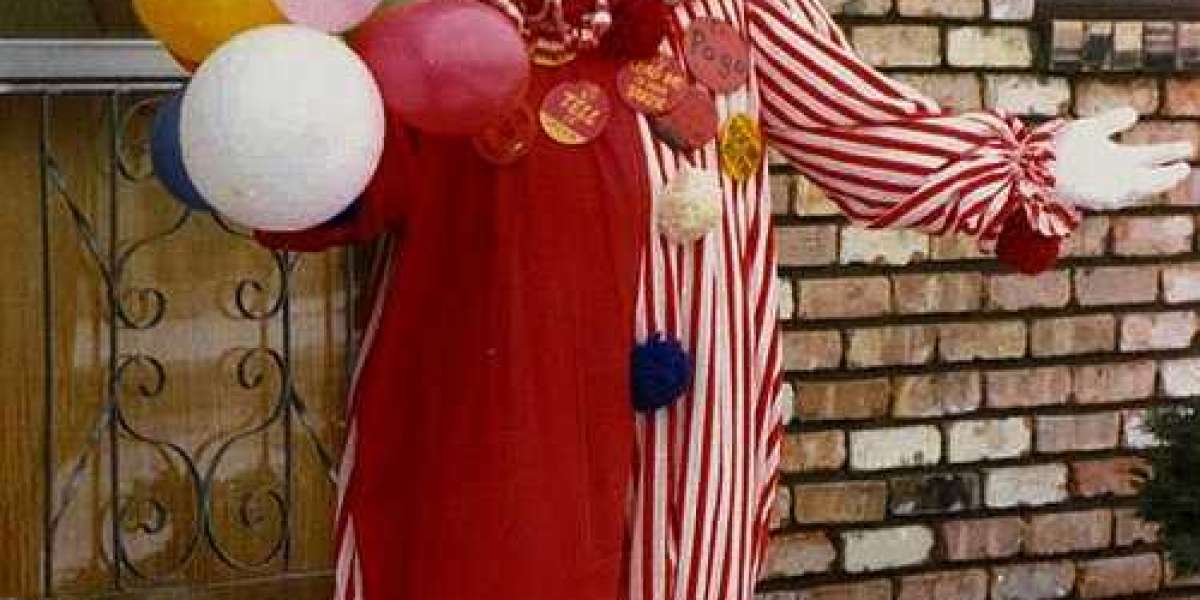
Isolated in his prison cell, Gacy began to paint, with his artwork occasionally produced via commission. He drew inspiration from a wide range of sources for his artwork, depicting subjects as diverse as clowns (including himself as Pogo or Patches), Jesus, the Seven Dwarfs, skulls, his own home, Elvis Presley, and John Dillinger. Gacy's paintings have been displayed at exhibitions and sold at auction.
Before his trial, Gacy initiated contact with journalist Russ Ewing, to whom he granted numerous interviews between 1979 and 1981. Ewing later collaborated with author Tim Cahill to publish the book Buried Dreams. The information Gacy divulged to Ewing regarding the circumstances of his first murder would prove instrumental in establishing the identity of his first victim.
On February 15, 1983, Henry Brisbon, a fellow death row inmate known as the I-57 killer, stabbed Gacy in the arm with a sharpened wire. He received treatment in the prison hospital.
After his incarceration, Gacy read law books and filed voluminous motions and appeals, although he did not prevail in any. His appeals related to issues such as the validity of the first search warrant granted to the Des Plaines police on December 13, 1978, and his objection to his lawyers' insanity plea defense. Gacy contended that, although he had "some knowledge" of five of the murders (those of McCoy, Butkovich, Godzik, Szyc and Piest), the other 28 murders had been committed by employees who had keys to his house while he was away on business trips.
In mid-1984, the Supreme Court of Illinois upheld Gacy's conviction and ordered his execution by lethal injection on November 14. Gacy filed an appeal against this decision, which was denied by the Supreme Court of the United States on March 4, 1985. The following year, Gacy filed a further post-conviction petition, seeking a new trial. His then-defense lawyer, Richard Kling, argued that Gacy had been provided with ineffective legal counsel at his 1980 trial. This petition was dismissed on September 11, 1986.
Gacy appealed the 1985 decision that he be executed. The Illinois Supreme Court upheld his conviction on September 29, 1988, setting a new execution date of January 11, 1989. After the U.S. Supreme Court denied Gacy's final appeal in October 1993, the Illinois Supreme Court formally set an execution date for May 10, 1994.
Execution
On the morning of May 9, 1994, Gacy was transferred to Stateville Correctional Center to be executed. That afternoon, he was allowed a private picnic on the prison grounds with his family. For his last meal, Gacy ordered a bucket of KFC, french fries, a dozen fried shrimp, fresh strawberries and a Diet Coke. That evening, he received the last rites from a Catholic priest before being escorted to the Stateville execution chamber. In the hours leading up to Gacy's execution, a crowd estimated at over 1,000 gathered outside the correctional center; a vocal majority were in favor of the execution, although a small number of anti-death penalty protesters were present. Some of those in favor of the execution wore T-shirts hearkening to Gacy's previous community services as a clown and bearing satirical slogans such as "No tears for the clown".
At 12:40 a.m., the procedure to administer the lethal injection began, although the chemicals used in the execution solidified unexpectedly, clogging the IV tube. The execution team replaced the clogged tube and the execution resumed. The entire procedure took 18 minutes. Anesthesiologists blamed the problem on the prison officials' inexperience at conducting an execution. This error apparently led to Illinois' adopting an alternative method of lethal injection. One prosecutor at Gacy's trial, William Kunkle, said, "He got a much easier death than any of his victims."
According to published reports, Gacy was a diagnosed psychopath who did not express any remorse for his crimes. His final statement to his lawyer before his execution was that killing him would not compensate for the loss of others, and that the state was murdering him. His final spoken words were reported to be "Kiss my ass", although prosecutor William Kunkle stated in 2020 that these words were spoken to a prison official, and were not part of any official statement prior to Gacy's execution.
After Gacy's death was confirmed at 12:58 a.m. on May 10, 1994, his brain was removed. It is in the possession of Helen Morrison, a witness for the defense at Gacy's trial, who has interviewed Gacy and other serial killers in an attempt to isolate common personality traits of violent sociopaths. He was cremated, and the whereabouts of his ashes remain undisclosed.
Amber alert
In 1984, Sam Amirante authored procedures that were incorporated by the Illinois General Assembly into the Missing Child Recovery Act of 1984. At the time of the Gacy murders, Illinois police had to wait 72 hours before initiating a search for a missing child or adolescent. The Missing Child Recovery Act removed this waiting period. Other states subsequently adopted similar procedures. As a result, a national network aimed at locating missing children was gradually formed. This has since developed into the Child Abduction Emergency—commonly known as an Amber alert.