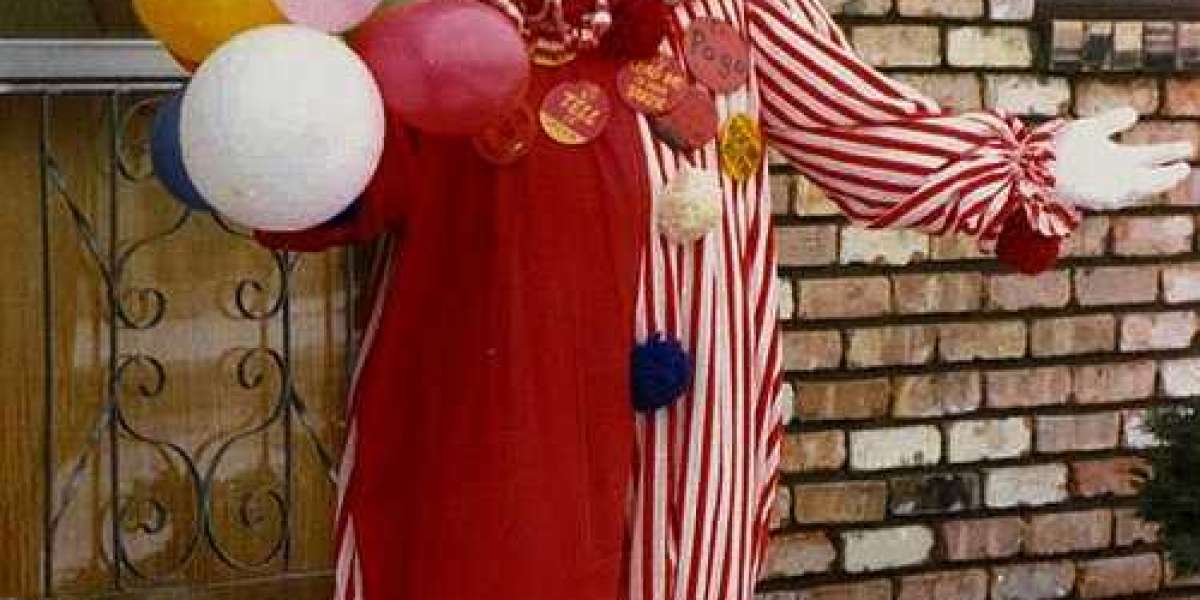

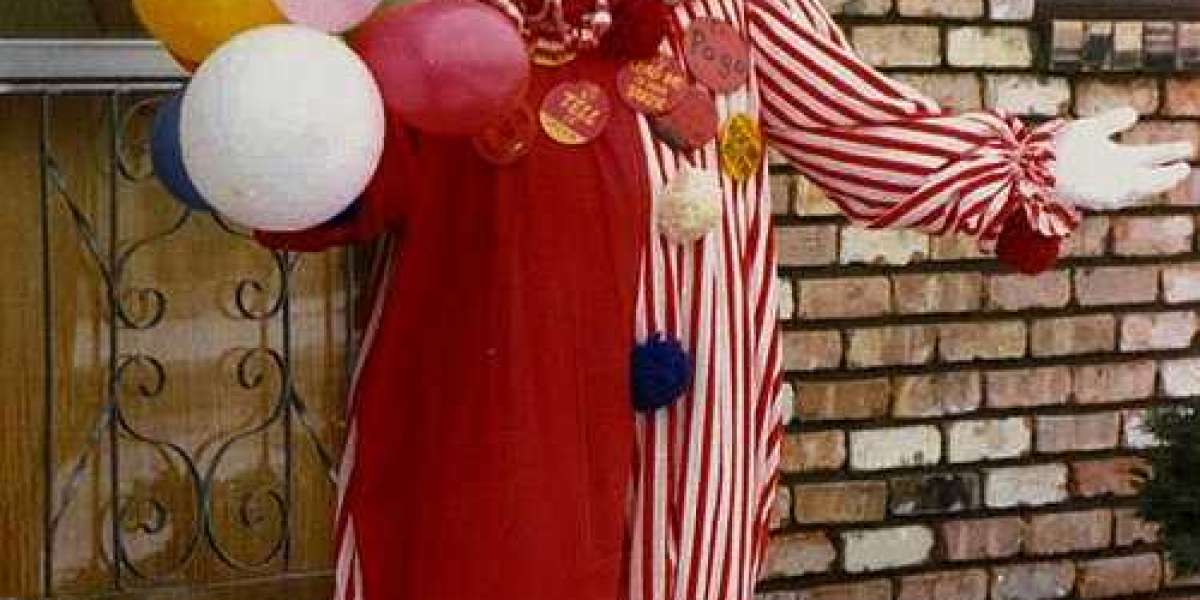
John Wayne Gacy (March 17, 1942 – May 10, 1994) was an American serial killer and sex offender who raped, tortured and murdered at least thirty-three young men and boys between 1972 and 1978 in Norwood Park Township, a suburb of Chicago, Illinois. He became known as the "Killer Clown" due to his public performances as a clown prior to the discovery of his crimes.
Gacy committed all of his known murders inside his ranch-style house. Typically, he would lure a victim to his home and dupe them into donning handcuffs on the pretext of demonstrating a magic trick. He would then rape and torture his captive before killing his victim by either asphyxiation or strangulation with a garrote. Twenty-six victims were buried in the crawl space of his home, and three were buried elsewhere on his property; four were discarded in the Des Plaines River.
Gacy had previously been convicted in 1968 of the sodomy of a teenage boy in Waterloo, Iowa, and was sentenced to ten years' imprisonment, but served eighteen months. He murdered his first victim in 1972, had murdered twice more by the end of 1975, and murdered at least thirty victims after his divorce from his second wife in 1976. The investigation into the disappearance of Des Plaines teenager Robert Piest led to Gacy's arrest on December 21, 1978.
Gacy's conviction for thirty-three murders (by one individual) then covered the most homicides in United States legal history. Gacy was sentenced to death on March 13, 1980. He was executed by lethal injection at Stateville Correctional Center on May 10, 1994.
Early life
Childhood
John Wayne Gacy was born at Edgewater Hospital in Chicago, Illinois, on March 17, 1942, the second of three children and only son of John Stanley Gacy and Marion Elaine Robison. His father was an auto repair machinist and World War I veteran, and his mother was a homemaker. Gacy was of Polish and Danish ancestry, and his family was Catholic.
Gacy was close to his mother and two sisters but had a difficult relationship with his alcoholic father, who was verbally and physically abusive to his family. The elder Gacy frequently belittled his son, calling him "dumb and stupid" and comparing him unfavorably with his sisters. One of Gacy's earliest childhood memories was of his father beating him at age four for accidentally disarranging car engine components. His mother tried to shield her son from his father's abuse, which resulted in accusations that he was a "sissy" and a "mama's boy" who would "probably grow up queer".
In 1949, Gacy's father whipped him after he and another boy were caught sexually fondling a young girl. The same year, a family friend began to occasionally molest Gacy. Gacy never told his father, afraid that his father would blame him. Despite their challenging relationship, Gacy loved his father, but felt he was "never good enough" in his father's eyes.
Gacy was an overweight and unathletic child. Because of a heart condition, he was told to avoid sports. In the fourth grade, Gacy began to experience blackouts. He was hospitalized on occasion because of these episodes and also, in 1957, for a burst appendix. Gacy later estimated that between the ages of 14 and 18, he had spent almost a year in hospital; he attributed the decline of his grades to missing school. Gacy's medical condition was never conclusively diagnosed; his father suspected he was malingering. On one occasion, he openly accused his son of faking as he lay in a hospital bed.
Career origins
In 1960, at age 18, Gacy became involved in politics, working as an assistant precinct captain for a local Democratic Party candidate. This led to more criticism from his father, who called him a "patsy". The same year, Gacy's father bought him a car. He kept the vehicle's title in his own name until Gacy had paid for it, which took several years. His father would confiscate the keys if Gacy did not do as he said. In April 1962, Gacy purchased an extra set of keys; in response, his father removed the distributor cap, keeping the component for three days. Hours after his father replaced the cap, Gacy left home and drove to Las Vegas, Nevada, with $136 to his name in the hope of residing with a cousin.
Gacy worked in the Las Vegas ambulance service before being transferred to Palm Mortuary. He worked as a mortuary attendant for three months, observing morticians embalming bodies and occasionally serving as a pallbearer. He slept on a cot behind the embalming room and later confessed that one evening, while alone, he clambered into the coffin of a teenage male, embracing and caressing the body before experiencing a sense of shock. This experience prompted Gacy to return home.
Shortly thereafter, Gacy enrolled at Northwestern Business College, despite having failed to complete high school. He graduated in 1963 and took a management trainee position with the Nunn-Bush Shoe Company. In 1964, the company transferred him to Springfield, Illinois, to work as a salesman, and eventually promoted him to department manager. In March of that year, he became engaged to Marlynn Myers, a co-worker.
During their courtship, Gacy joined the local chapter of the Jaycees. That same year, he had his second homosexual experience. According to Gacy, a colleague in the Jaycees plied him with drinks and invited him to spend the evening on his sofa; the colleague then performed oral sex on him while he was drunk. By 1965, Gacy had risen to the position of vice-president of the Springfield Jaycees and was named the third-most outstanding Jaycee in Illinois.
Waterloo, Iowa
KFC manager
Gacy and Myers married in September 1964. Marlynn's father subsequently purchased three Kentucky Fried Chicken (KFC) restaurants in Waterloo, Iowa. The couple moved there so Gacy could manage the restaurants, with the understanding that they would move into Marlynn's parents' former home. The offer was lucrative: Gacy would receive $15,000 per year (the equivalent of about $156,800 as of 2026), plus a share of the restaurant's profits.
Gacy opened a "club" in his basement where his employees could drink alcohol and play pool. Although Gacy employed teenagers of both sexes, he socialized only with the males. Gacy gave many of them alcohol before he made sexual advances; if they rebuffed him, he would claim his advances were jokes or a test of morals.
Gacy's wife gave birth to a son in February 1966 and a daughter in March 1967. Gacy later described this period of his life as "perfect"—he had finally earned his father's approval. When Gacy's parents visited in July 1966, his father privately apologized for the abuse he had inflicted before happily saying, "Son, I was wrong about you", as he shook Gacy's hand.
Waterloo Jaycees

In Waterloo, Gacy joined the local Jaycees chapter, regularly offering extended hours to the organization in addition to the twelve- and fourteen-hour days he worked managing the restaurants. At meetings, Gacy often provided fried chicken and insisted on being called "Colonel". He and other Waterloo Jaycees were also deeply involved in drug abuse, pornography, prostitution and wife swapping. Although Gacy was considered ambitious and a braggart, the Jaycees held him in high regard for his fundraising work: in 1967 he was named "outstanding vice-president" of the Waterloo Jaycees and served on the board of directors.
Assault of Donald Voorhees
In August 1967, Gacy sexually assaulted 15-year-old Donald Voorhees Jr., the son of Donald Edwin Voorhees, a local politician and fellow Jaycee. Gacy lured Voorhees to his house with the promise of showing him heterosexual stag films regularly played at Jaycee events. Gacy plied Voorhees with alcohol, allowed him to watch a stag movie, then persuaded him to engage in mutual oral sex, adding, "You have to have sex with a man before you start having sex with women."
Over the following months, Gacy abused several other youths, including one whom he encouraged to have sex with his own wife before blackmailing him into performing oral sex on him. Gacy also tricked several teenagers into believing he was commissioned to conduct homosexual experiments for scientific research and paid them up to $50 each.
In March 1968, Voorhees told his father that Gacy had sexually assaulted him. Voorhees Sr. immediately informed the police, who arrested Gacy and charged him with performing oral sodomy on Voorhees and the attempted assault of 16-year-old Edward Lynch. Gacy vehemently denied the charges and demanded to take a polygraph test. The results of these tests were "indicative of deception". Gacy publicly denied any wrongdoing and insisted the charges were politically motivated—Voorhees Sr. had opposed Gacy's nomination for appointment as president of the Iowa Jaycees. Several fellow Jaycees found Gacy's story credible and rallied to his support. However, on May 10, 1968, Gacy was indicted on the sodomy charge.
On August 30, Gacy promised one of his employees, 18-year-old Russell Schroeder, $300 if he physically assaulted Voorhees in an effort to discourage the boy from testifying in court. Schroeder lured Voorhees to an isolated park, sprayed Mace in his eyes, then beat him.
Voorhees escaped and reported Schroeder's actions to police. Schroeder was arrested the next day; initially denying involvement, he soon confessed to assaulting Voorhees, indicating he had done so at Gacy's request. Police arrested Gacy and charged him with hiring Schroeder to assault and intimidate Voorhees.
On September 12, Gacy was ordered to undergo a psychiatric evaluation at the Psychiatric Hospital of the University of Iowa. Two doctors concluded he had an antisocial personality disorder (the clinical term for sociopathy or psychopathy), was unlikely to benefit from treatment, and that his behavior pattern was likely to bring him into repeated conflict with society. The doctors concluded Gacy was mentally competent to stand trial.
Conviction and imprisonment
On November 7, 1968, Gacy pleaded guilty to one count of sodomy in relation to Voorhees, but not guilty to the charges related to other youths. He claimed Voorhees had offered himself to him and that he had acted out of curiosity. His story was not believed. Gacy was convicted of sodomy on December 3 and sentenced to ten years' imprisonment, to be served at the Anamosa State Penitentiary. That same day, Gacy's wife petitioned for divorce, requesting she be awarded the couple's home and property, sole custody of their two children, and alimony. The court ruled in her favor, and the divorce was finalized on September 18, 1969. Gacy never saw his first wife or children again.
During his incarceration, Gacy rapidly acquired a reputation as a model prisoner. Within months of his arrival, he had risen to the position of head cook. He also joined the inmate Jaycee chapter and increased its membership from 50 to 650 men in less than eighteen months. Gacy secured an increase in the inmates' daily pay in the prison mess hall and supervised several projects to improve conditions for inmates, including the installation of a miniature golf course; he was presented with a distinguished service award for his efforts within the inmate Jaycee chapter in February 1970.
In June 1969, Gacy was denied parole. To prepare for a second scheduled parole hearing in May 1970, he completed sixteen high school courses, obtaining his diploma in November 1969. On Christmas Day 1969, Gacy's father died from cirrhosis. When informed of his father's death, Gacy collapsed to the floor, sobbing. His request for supervised compassionate leave to attend the funeral was denied.
Return to Chicago
Gacy was granted parole with twelve months' probation on June 18, 1970, having served eighteen months of his ten-year sentence. Conditions of his probation included a nightly curfew and that Gacy relocate to Chicago to live with his mother. On his release, Gacy told friend and fellow Jaycee Clarence Lane—who picked him up from the prison and had remained steadfast in his belief of Gacy's innocence—that he would "never go back to jail" and that he intended to re-establish himself in Waterloo. However, within twenty-four hours, Gacy had relocated to Chicago. He arrived there by bus on June 19 and shortly thereafter obtained a job as a short-order cook.
On February 12, 1971, Gacy was charged with sexually assaulting a teenage boy who claimed that he had lured him into his car at Chicago's Greyhound bus terminal and driven him to his home, where he had attempted to force the boy into sex. The court dismissed this complaint when the boy failed to appear. On June 22, Gacy was arrested and charged with aggravated sexual battery and reckless conduct, in response to a complaint filed by a youth who claimed that Gacy had flashed a sheriff's badge, lured him into his car, and forced him to perform oral sex. These charges were dropped after the complainant attempted to blackmail Gacy. The Iowa Board of Parole did not learn of these incidents. Gacy's parole ended on October 18, 1971, and a month later the records of Gacy's criminal convictions in Iowa were sealed.
8213 West Summerdale Avenue
With financial assistance from his mother, Gacy bought a ranch-style house at 8213 West Summerdale Avenue in unincorporated Norwood Park Township, Illinois, part of metropolitan Chicago. He lived there until his arrest in December 1978 and, according to Gacy, committed all his murders there.
Gacy was active in his local community and helpful towards his neighbors; he willingly loaned his construction tools and plowed snow from neighborhood walks free of charge. From 1974 to 1978, he hosted themed annual summer parties. These events were attended by up to 400 people, including neighbors, politicians and business associates.
Second marriage and divorce
In August 1971, shortly after Gacy and his mother moved into the house, he became engaged to Carole Hoff, whom he had briefly dated in high school. Hoff and her two young daughters from a previous marriage moved into the house soon after. They were married on July 1, 1972. Gacy's mother moved out of the house shortly before the wedding.
By 1975, Gacy had told his wife that he was bisexual. After the couple had sex on Mother's Day that year, he informed her this would be "the last time" they would do so. He began spending most evenings away from home, only to return in the early morning with the excuse he had been working late or conducting business meetings. Carole observed Gacy bringing teenage boys into his garage in the early hours and also found gay pornography and men's wallets and identification inside the house. When she confronted Gacy about these items, he informed her angrily that it was none of her business.
In October 1975, after a heated argument, Carole asked Gacy for a divorce. He agreed although, by mutual consent, she continued to live at his house until February 1976. On March 2, the Gacys' divorce—decreed on the false grounds of Gacy's infidelity with women—was finalized.
PDM Contractors
In 1971, Gacy established a part-time construction business, PDM Contractors (for "Painting, Decorating, and Maintenance"). With the approval of his probation officer, Gacy worked evenings on his construction contracts while working as a cook during the day. Initially, he undertook minor repair work, but later expanded to include projects such as interior design, remodeling, and landscaping. In mid-1973, Gacy quit his job as a cook so he could commit fully to his construction business.
By 1975, PDM was expanding rapidly and Gacy was working up to sixteen hours per day. In March 1977, he became a supervisor for PE Systems, a firm specializing in the remodeling of drugstores. Between PE Systems and PDM, Gacy worked on up to four projects simultaneously and frequently traveled to other states. By 1978, PDM's annual revenue was over $200,000.
Clown

Through his membership in a local Moose Club, Gacy became aware of a "Jolly Joker" clown club, whose members regularly performed at fundraising events and parades in addition to voluntarily entertaining hospitalized children. In late 1975, Gacy joined the clown club and created his own characters "Pogo the Clown" and "Patches the Clown", devising his own makeup and costumes. He described Pogo as a "happy clown", whereas Patches was a "more serious" character.
Gacy seldom earned money for his performances and later said that acting as a clown allowed him to "regress into childhood". He performed as both Pogo and Patches at numerous local parties, political functions, charitable events, and children's hospitals. Gacy's voluntary public service as a clown throughout the years of his murders led to him being known as the "Killer Clown".
Employees
Much of PDM's workforce consisted of high school students and young men. Gacy would often proposition his workers for sex, or insist on sexual favors in return for lending his vehicles, financial assistance or promotions. Gacy also claimed to own guns, once telling an employee, "Do you know how easy it would be to get one of my guns and kill you—and how easy it would be to get rid of the body?"
In 1973, Gacy and a teenage employee traveled to Florida to view a property Gacy had purchased; while there, Gacy raped the employee in their hotel room. After returning to Chicago, this employee drove to Gacy's house and beat him in his front yard. Gacy told his wife he had been attacked for refusing to pay him for poor quality painting work.
In May 1975, Gacy hired 15-year-old Anthony Antonucci. Two months later, he went to Antonucci's home, knowing the youth had an injured foot. The two drank a bottle of wine, then watched a heterosexual stag film before Gacy wrestled Antonucci to the floor and cuffed his hands behind his back. One cuff was loose and Antonucci freed his arm while Gacy was out of the room. When Gacy returned, Antonucci—a high school wrestler—grappled with him, obtained the key, and cuffed Gacy's hands behind his back. Gacy threatened Antonucci, then calmed down and promised to leave if he was freed. Antonucci agreed and Gacy left. Antonucci continued working for PDM for nine months after this incident, and Gacy made no further attempts to assault him.
On July 26, 1976, Gacy picked up 18-year-old hitchhiker David Cram and offered him a job with PDM; he began work the same evening. On August 21, Cram moved into Gacy's house. The next day, Cram and Gacy had several drinks to celebrate his 19th birthday, with Gacy dressed as Pogo. Gacy tricked Cram into donning handcuffs, his wrists cuffed in front of his body rather than behind. He swung Cram around while holding the chain linking the cuffs, then said he intended to rape him. Cram kicked Gacy in the face and freed himself.
A month later, Gacy appeared at Cram's bedroom door intending to rape him, saying, "Dave, you really don't know who I am. Maybe it would be good if you give me what I want." Cram resisted, straddling Gacy, who left the bedroom, stating, "You ain't no fun." Cram moved out on October 5 and left PDM (although he periodically worked for Gacy over the following two years). Shortly afterwards, another employee, 18-year-old Michael Rossi, moved in. Rossi had worked for PDM since May 23, 1976. He lived with Gacy until April 1977. Rossi sometimes assisted Gacy in clowning at grand openings of businesses: Gacy as Pogo and Rossi as Patches.
Politics

Gacy entered local Democratic Party politics, initially offering use of his employees to clean party headquarters at no charge. He was rewarded with an invitation to serve on the Norwood Park Township street lighting committee, subsequently earning the title of precinct captain.
In 1975, Gacy was appointed director of Chicago's annual Polish Constitution Day Parade. Through his work with the parade, which he would supervise until 1978, Gacy met and was photographed with First Lady Rosalynn Carter wearing an "S" pin, indicating a person given special clearance. The event later became an embarrassment to the United States Secret Service.
Murders
Gacy murdered at least thirty-three young men and boys, twenty-six of whom he buried in the crawl space of his house. His victims included people he knew and random individuals lured from Chicago's Greyhound Bus station, Bughouse Square, or off the streets with the promise of a job with PDM, an offer of alcohol, drugs, or money for sex. Some victims were grabbed by force; others were conned into believing Gacy (who often carried a sheriff's badge and had red spotlights on his black Oldsmobile) was a policeman. Gacy usually lured a lone victim to his house, although on more than one occasion Gacy had what he called "doubles"—two killed in the same evening.
Inside Gacy's home, his usual modus operandi was to ply a youth with drink, drugs, or generally gain his trust. He would then produce a pair of handcuffs to "show a magic trick",
sometimes as part of a clowning routine. He typically cuffed his own hands behind his back, then surreptitiously released himself with a hidden key. He then offered to show his intended victim the trick. With his victim restrained, Gacy proceeded with rape and torture. He frequently began by sitting on or straddling his victim's chest before forcing the victim to fellate him.
Gacy then inflicted acts of torture including burning with cigars, making his captive imitate a horse as he sat on their back and pulled on makeshift reins around their necks, and violation with foreign objects such as dildos and prescription bottles after he had sodomized his captive. Gacy frequently manacled his captives' ankles to a two-by-four with handcuffs attached at each end, an act inspired by the Houston Mass Murders. He also taunted many victims throughout their abuse, and was known to have partly drowned several in the bathtub before repeatedly reviving them.
Gacy typically murdered his victims by placing a rope tourniquet around their neck and progressively tightening it with a hammer handle. He referred to this as the "rope trick", frequently informing his victim, "This is the last trick." Occasionally, the victim convulsed for an "hour or two" before dying, although several victims died by asphyxiation from cloth gags stuffed deep in their throats. Except for his two final victims, all were murdered between 3:00 and 6:00 a.m. Gacy usually stored the victims' corpses under his bed for up to twenty-four hours before burying them in the crawl space, where he periodically poured lime to hasten decomposition. Some were taken to his garage and embalmed prior to burial.
Murder of Timothy McCoy

Gacy's first known murder occurred on January 3, 1972. According to Gacy's later account, following a family party the previous evening, he drove to the Civic Center in the Loop in the early morning to view a display of ice sculptures. He then lured 16-year-old Timothy Jack McCoy from Chicago's Greyhound Bus Terminal into his car. McCoy was on his way to his father's home in Omaha, Nebraska, and informed Gacy his bus was not due until noon. Gacy took McCoy on a sightseeing tour of Chicago and then drove him to his home with the promise that he could spend the remainder of the night and be driven back to the station in time to catch his bus. Prior to McCoy's identification, he was known as the "Greyhound Bus Boy".
Gacy claimed he woke early the following morning to find McCoy standing in his bedroom doorway holding a kitchen knife. He jumped from his bed and McCoy raised both arms in a gesture of surrender, accidentally cutting Gacy's forearm. Gacy disarmed McCoy, banged his head against the bedroom wall, and kicked him against his wardrobe. McCoy kicked Gacy in the stomach, doubling him over. Gacy then grabbed McCoy, wrestled him to the floor and stabbed him repeatedly in the chest.
As McCoy lay dying, Gacy claimed he washed the knife in his bathroom, then went to his kitchen and saw the makings of breakfast on the table. McCoy had set the table for two; he had walked into Gacy's room to wake him while absentmindedly carrying the knife. Gacy buried McCoy in his crawl space and later covered his grave with a layer of concrete. In an interview several years after his arrest, Gacy said that immediately after killing McCoy, he felt "totally drained", yet noted that as he stabbed McCoy and listened to the "gurgulations" and gasping, he had experienced a mind-numbing orgasm. He added: "That's when I realized that death was the ultimate thrill."
Second murder
Gacy said he committed murder for the second time around January 1974. This victim remains unidentified. He was strangled and placed in Gacy's closet before burial. Gacy later stated that bodily fluids leaked from the victim's mouth and nose, staining his carpet. Because of this incident, Gacy regularly stuffed rags, the victim's own underwear, or a sock deep into the mouths of subsequent victims to prevent such a leakage.
Murder of John Butkovich

On July 31, 1975, John Butkovich, an 18-year-old PDM employee, disappeared. Butkovich had worked for Gacy for approximately two years prior to his disappearance. His car was later found abandoned with his jacket and wallet inside and the keys in the ignition.
The day prior to his disappearance, Butkovich and two friends had confronted Gacy regarding two weeks' outstanding back pay owed to him. According to Gacy, the trio left his home after reaching a compromise that should credit be returned to his own contractor's account if carpeting Butkovich had purchased using his contractor's account was returned to the store, he would give Butkovich his check.
Butkovich's father called Gacy, who claimed he was happy to help search for his son but was sorry Butkovich had "run away". When questioned by police, Gacy said Butkovich and two friends had arrived at his house demanding the overdue pay, but they had reached a compromise and all three had left. Over the following three years, Butkovich's parents called police more than 100 times, urging them to investigate Gacy further.
Gacy later admitted to encountering Butkovich exiting his car, waving to attract his attention. According to Gacy, Butkovich approached him, stating, "I wanna talk to you." Gacy invited Butkovich into his car, then invited him back to his home, ostensibly to settle the issue of his overdue wages. At his home, Gacy offered Butkovich a drink, then conned him into allowing his wrists to be cuffed behind his back. Gacy later confessed to having "sat on the kid's chest for a while" before he strangled him. He stowed Butkovich's body in his garage, intending to bury the body later in the crawl space. When his wife and stepdaughters returned home earlier than expected, Gacy buried Butkovich under the concrete floor of the tool room extension of his garage in an empty space where he had intended to dig a drain tile.
Cruising years
In addition to being the year his business expanded, Gacy freely admitted that 1975 was also when he began to increase the frequency of his excursions for sex with young males. He often referred to these jaunts as "cruising". Gacy committed most of his murders between 1976 and 1978, as he largely lived alone following his divorce.
Although Gacy remained gregarious and civic-minded, several neighbors noticed behavioral changes after his 1976 divorce, including seeing him keeping company with young males, hearing his car arrive or depart in the early morning, or seeing lights in his home switch on and off in the early hours. One neighbor later recollected that, for several years, muffled high-pitched screaming, shouting, and crying had repeatedly awakened her and her son in the early morning. She identified the sounds as emanating from a house adjacent to theirs on West Summerdale Avenue.
1976
One month after his divorce was finalized, Gacy abducted and murdered 18-year-old Darrell Samson. He was last seen alive in Chicago on April 6, 1976. Gacy buried him under the dining room, with cloth lodged in his throat. On May 14, 15-year-old Randall Reffett disappeared shortly after returning home from a dental appointment. Hours after Reffett was last seen by his family, 14-year-old Samuel Stapleton vanished as he walked home from his sister's apartment. He and Reffett were close acquaintances; they were buried together in the crawl space, and investigators believe the two were murdered the same evening.
On June 3, Gacy killed 17-year-old Michael Bonnin, who disappeared while traveling from Chicago to Waukegan. Gacy strangled Bonnin with a ligature and buried him under the spare bedroom. Ten days later, Gacy murdered 16-year-old William Carroll and buried him in a common grave in the crawl space. Carroll seems to have been the first of four victims known to have been murdered between June 13 and August 6, 1976. Three were between 16 and 17 years old, and one unidentified victim appears to have been an adult.
On August 5, 16-year-old James Haakenson is last known to have phoned his family, possibly from Gacy's home. Haakenson died of suffocation. His body was buried in the crawl space beneath 17-year-old Rick Johnston, who was last seen alive on August 6.
Gacy is thought to have murdered two unidentified males between August and October 1976. On October 24, Gacy abducted and killed teenage friends Kenneth Parker and Michael Marino: the two were last seen on Clark Street in Chicago. Two days later, 19-year-old construction worker William Bundy disappeared after informing his family he was to attend a party. Bundy died of suffocation. Gacy buried the body beneath his master bedroom. Bundy had apparently worked for Gacy.
Between November and December 1976, Gacy murdered 21-year-old Francis Alexander. His last contact with his family was a phone call to his mother sometime in November. He was not reported missing as his family believed he had moved to California shortly thereafter. Alexander was buried beneath the room Gacy used as his office.
In December 1976, 17-year-old Gregory Godzik disappeared. His girlfriend last saw him outside her house. Godzik had worked for PDM for less than three weeks when he disappeared. He had informed his family that Gacy had had him "dig trenches for some kind of (drain) tiles" in his crawl space. Godzik's car was later found abandoned. His parents and older sister contacted Gacy about Godzik's disappearance. Gacy claimed that Godzik had expressed a wish to run away from home; he also claimed to have received an answering machine message from Godzik shortly after he had disappeared. When asked if he could play the message for Godzik's parents, Gacy said he had erased it.
1977
On January 20, 1977, Gacy lured 19-year-old John Szyc to his house on the pretext of buying his Plymouth Satellite. He later confessed to strangling Szyc in his spare bedroom, claiming Rossi was asleep in the house the following morning. Gacy later sold the car to Rossi for $300.
Two months later, on March 15, 20-year-old Jon Prestidge disappeared. Prestidge was last seen leaving a Near North Side restaurant. He was buried in the crawl space above the body of Francis Alexander. Shortly before his disappearance, Prestidge had mentioned he had obtained work with a local contractor. Gacy murdered one additional unidentified youth and buried him in the crawl space in the spring or early summer of 1977. On July 5, Gacy killed 19-year-old Matthew Bowman. Bowman's mother last saw him at a suburban train station; he had intended to travel to Harwood Heights for a court appointment.
The following month, Rossi was arrested for stealing gasoline while driving Szyc's car. The gas station attendant noted the license plate and police traced the car to Gacy's house. When questioned, Gacy told officers that Szyc had sold the car to him in February, saying he needed money to leave town. A check of the VIN confirmed the car had belonged to Szyc. The police did not pursue the matter further, although they did inform Szyc's mother that her son had sold his car.
By the end of 1977, Gacy had murdered six more young men between the ages of 16 and 21. The first of these was 18-year-old Robert Gilroy, the son of a Chicago police sergeant, last seen alive on September 15. Gilroy lived four blocks from Gacy's house. He was buried in the crawl space. On September 12, Gacy had flown to Pittsburgh, Pennsylvania, to supervise a remodeling project, and did not return to Chicago until September 16. Because Gacy was in another state at the time Gilroy was last seen, this is cited to support Gacy's claim of assistance from one or more accomplices in several homicides. Ten days after Gilroy was last seen, 19-year-old former U.S. Marine John Mowery disappeared after leaving his mother's house. Gacy strangled Mowery and buried his body beneath the master bedroom.
On October 17, 21-year-old Russell Nelson disappeared; he was last seen outside a Chicago bar. Nelson was looking for contracting work. Gacy murdered and buried him beneath the guest bedroom. Less than four weeks later, Gacy murdered 16-year-old Robert Winch and buried him in the crawl space. Twenty-year-old Tommy Boling disappeared on November 18 after leaving a Chicago bar. On December 9, 19-year-old U.S. Marine David Talsma disappeared after telling his mother he was to attend a rock concert in Hammond, Indiana. Gacy strangled Talsma with a ligature and buried him in the crawl space, close to John Mowery.
On December 30, Gacy abducted 19-year-old college student Robert Donnelly from a Chicago bus stop at gunpoint. Gacy drove him to his home, where he raped, tortured, and repeatedly drowned Donnelly to unconsciousness in a bathtub as he made statements such as, "Aren't we playing fun games tonight?" Donnelly later testified at trial that he was in such pain that he asked Gacy to kill him. Gacy replied "I'm getting 'round to it." After several hours, Gacy drove Donnelly to his workplace and released him, warning him that if he complained to police, they would not believe him.
1978
Donnelly reported the assault, and police questioned Gacy on January 6, 1978. Gacy admitted to having had a "slave-sex" relationship with Donnelly, but insisted everything was consensual, adding that he "didn't pay the kid" the money he had promised him. The police believed him and filed no charges. The following month, Gacy killed 19-year-old William Kindred, who disappeared on February 16 after telling his fiancée, who knew Gacy, that he was going to a bar. Kindred was the final victim buried in the crawl space.
On March 21, Gacy lured 26-year-old Jeffrey Rignall into his car. Gacy chloroformed him and drove him to his house, where his arms and head were restrained in a pillory device affixed to the ceiling and his feet locked into another device. He raped and tortured Rignall with instruments including lit candles and whips and repeatedly chloroformed him into unconsciousness. Gacy then dumped Rignall in Chicago's Lincoln Park, unconscious but alive.
Rignall managed to stagger to his girlfriend's apartment. Police were informed of the assault but did not investigate Gacy. Rignall was able to recall the Oldsmobile, the Kennedy Expressway and particular side streets. He and two friends staked out the Cumberland exit of the Expressway and, in April, Rignall saw the Oldsmobile, which he and his friends followed to 8213 West Summerdale. Gacy was arrested on July 15; he faced trial for assault and battery against Rignall.
By mid-1978, the crawl space had no room for further bodies. Gacy later confessed to police that he considered stowing bodies in his attic, but had been worried about complications arising from "leakage". Therefore, he chose to dispose of his victims off the I-55 bridge into the Des Plaines River. Gacy stated he had thrown five bodies into this river in 1978, one of which he believed had landed on a passing barge; only four were ever found.
The first known victim thrown from the bridge was 20-year-old Timothy O'Rourke. He was murdered in mid-June after leaving his apartment to purchase cigarettes. Shortly before his disappearance, O'Rourke had told his roommate a contractor on the Northwest Side had offered him a job. On November 4, Gacy killed 19-year-old Frank Landingin. He was last seen alive by his father walking along Foster Avenue; his naked body was found close to an inlet in the Des Plaines River by two duck hunters on November 12. On November 24, 20-year-old James Mazzara disappeared after Thanksgiving dinner with his family. Mazzara had informed his sister the day before that he was working in construction. He was last seen walking in the direction of Bughouse Square.
Murder of Robert Piest
_as_a_high_school_freshman.png)
On the afternoon of December 11, 1978, Gacy visited the Nisson Pharmacy in Des Plaines, to discuss a potential remodeling deal with the store owner, Phil Torf. While he was within earshot of 15-year-old part-time employee Robert Piest, Gacy mentioned his firm often hired teenage boys at a starting wage of $5 per hour—almost double the pay Piest earned at the pharmacy.
Shortly after Gacy left, Piest's mother arrived at the store to drive her son home so the family could celebrate her birthday together. Piest asked his mother to wait, adding that "some contractor wants to talk to me about a job". He left the store at 9:00 p.m., promising to return shortly.
Piest was murdered shortly after 10:00 p.m. at Gacy's home. Gacy later stated that at his house, he gave Piest a soft drink before asking whether there was anything he "wouldn't do for the right price", to which Piest replied that he did not mind working hard. In response, Gacy stated "good money" could be earned by hustling, although Piest was dismissive. Gacy then duped Piest into donning handcuffs. Gacy's subsequent statements regarding the events varied, although in one of his initial statements, he claimed Piest failed to resist as he removed the boy's trousers. He also stated that as he placed the rope around Piest's neck, the boy was "crying, scared". Gacy admitted to having received a phone call from a business acquaintance as Piest lay dying.
Investigation
When Piest failed to return, his family filed a missing person report with the Des Plaines police. Torf named Gacy as the contractor Piest had most likely left the store to talk to. Lieutenant Joseph Kozenczak, whose son attended Maine West High School like Piest, chose to investigate Gacy further. A check of Gacy's criminal background revealed that he had an outstanding battery charge in Chicago and had been imprisoned in Iowa for the sodomy of a 15-year-old boy.
Kozenczak and two Des Plaines police officers visited Gacy at his home the following evening. Gacy indicated he had asked one of the youths working at the pharmacy—whom he believed to be Piest—whether there were any remodeling materials behind the store. He was adamant, however, that he had not offered Piest a job, and had only returned to the pharmacy shortly after 8:00 p.m. as he had left his appointment book. Gacy promised to come to the station later that evening to make a statement, indicating he was unable to do so at that moment as his uncle had just died. When questioned as to how soon he could come to the police station, he responded, "You guys are very rude. Don't you have any respect for the dead?"
At 3:20 a.m., Gacy arrived at the police station covered in mud, claiming he had been involved in a car accident. On returning to the police station later that day, Gacy denied any involvement in Piest's disappearance and repeated that he had not offered him a job. Gacy reiterated that he had returned to the pharmacy in response to a phone call from Torf informing him he had left his appointment book at the store. Detectives had already spoken with Torf, who denied calling Gacy. At the request of detectives, Gacy prepared a written statement detailing his movements on December 11.
First search warrant
Suspecting Gacy might be holding Piest at his home, Des Plaines police obtained a search warrant on December 13. This search revealed several suspicious items, including several police badges, a starting pistol, a syringe and hypodermic needle, handcuffs, books about homosexuality and pederasty, pornographic and stag films, capsules of amyl nitrite, a dildo, a two-by-four with two holes drilled into each end, bottles of Valium and atropine, several driver's licenses, a blue hooded




James McDonald 13 w
Interesting Story. Thanks For Posting.